Neck and Shoulder Pain Self Care
Step 1: Get A Good Night's Sleep
One of the very best ways to get a good start on your day when you have neck and shoulder pain is to choose the right bed pillow to fully support your head and shoulders while you sleep. By providing proper support for the muscles in your neck for the 8 or so hours that you are sleeping each night, you will give your muscles time to recover and rejuvenate. Learn how to choose a good pillow for your needs here:
How To Choose A Good Pillow To Properly Support Your Neck and Head
Step 2: Correct Your Posture
Tips From Sharon
 |
Do you have a habit of raising your shoulders without realizing it? Click HERE to learn a simple trick that will help you break that habit. |
Neck and shoulder pain often develops as a result of poor posture . Correcting your posture is one of the most helpful things you can do to avoid neck and shoulder pain in the future. Trying to remember to sit up straight, avoiding the unnecessary raising of your shoulders and keeping your head situated squarely over your shoulders is a challenge to be sure. But, the payoff is huge in terms of pain reduction and relief. Keep up the good work and reap the rewards!
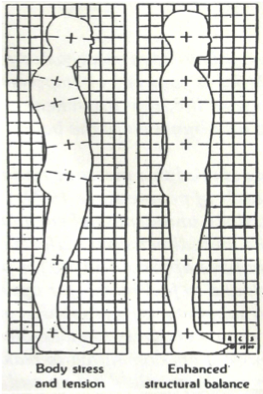
Your head weighs approximately ten pounds. It is designed to sit right on top of your shoulders. When your head and neck are properly aligned with the rest of your body, gravity will support their weight with a minimum of tension. In their proper alignment, your neck muscles have much less work to do holding your head in place.
In our society, it is very common to have a forward head as shown in the figure on the left. This means that the weight of your head is poorly supported and your neck muscles have to work extra hard to keep your head on top of your shoulders.
Simply changing your habits to include good posture can go a long way to eliminating pain in your neck and shoulders.
Step 3: Stretching To Ease Neck and Shoulder Pain
Once you have had a restful night's sleep, your neck and shoulder pain will respond very well to slow and gentle stretching of all the muscles that support the head, neck and upper back.
This means that a good overall stretching program should include stretches for the front, sides and back of the neck, the chest and the upper back and shoulders.
Remember that the armpits are part of the shoulder girdle and the muscles that pass through the armpits often play a big role along with chronically tight neck and shoulder muscles.
It is really important to stretch all the muscles equally as they are all dependent on the condition of each other as they support the weight of the head.
When stretching the neck muscles, it’s important to remember that the relatively small muscles of the neck have a really big job to do. That is, they are responsible for holding up the ten pound weight of your head for the entire day, no matter what position you put your head in. And, some of these positions can be very stressful indeed!
If the muscles in your neck are in pain, avoid adding stress to them by supporting the weight of your head while you are stretching for the safest and fastest results.
|
|
Tips From Sharon |
When stretching neck muscles, make sure that the weight of your head is fully supported. Propping your head on your fingertips as you tilt forward or to the side keeps the neck muscles from tightening while you are trying to stretch them.
Adding slow and gentle movement to stretches for the neck and shoulders is very helpful for achieving accelerated results. Nodding or turning your head through a very small range of motion while supporting the weight of your head is a relatively safe way to stretch the neck muscles while making sure that you don’t put too much stress through any one small area of tissue for any length of time.
If you ever feel that you have overdone your stretches, or you feel sore after practicing your stretches, then take time off from your stretching program to allow your muscles time to calm down.
When you are finished stretching your neck and shoulder muscles, it is always helpful to rest in a neutral position, like sitting straight in a chair with your hands in your lap, or lying flat on the floor.
Resting for 1 to 5 minutes following the end of your stretches gives your body time to integrate the changes you have made and helps prevent irritation in the muscles if you happened to stretch a little too aggressively. This gives your muscles time to calm down from the hard work of the stretches you have just performed.
Professional Help May Be Called For
I always recommend that if you can, it is a great idea to have a few sessions, or series of sessions with a practitioner of Structural Integration if you are experiencing neck and shoulder pain.
I am particularly fond of Hellerwork since I have been practicing it for over thirty years and I’ve seen the wonderful results that can occur with this type of rebalancing work.
If a Hellerwork Practitioner is not available in your area, then visit a Rolfer or a graduate of the Guild for Structural Integration. You can find information about certified graduates of these programs by visiting the Resources section of this web site.
Teachers of the Alexander technique or Feldenkrais technique can also be very helpful in reducing the sources of structural strain that lead to neck and shoulder pain.
Step 4: Drink Plenty of Water
Drinking plenty of water is always important with any muscle or soft tissue problem.
Your muscles, blood vessels and nerves are designed to slide and glide next to or across one another, making movement fluid and pain free. Often, when you have pain, you may not be as well hydrated as you should be.
Adequate hydration is important for restoring the normal sliding and gliding capabilities of the fascia in your neck and shoulders. Keep drinking lots and lots of water!
Click HERE to Learn More!
To learn more about Neck and Shoulder Pain, visit the following sections:
Neck and Shoulder Pain Anatomy
Neck and Shoulder Pain Symptoms
Click the block below that most closely matches your injury for more information and to find the Toolkit we offer to help you in your recovery.







Recent Articles


-
Golfers Elbow Symptoms
Oct 11, 18 05:40 PM
Golfers Elbow (Medial Epicondylitis) symptoms include pain at the medial epicondyle when the fingersw are closed, the wrist bent palmward, or pressure is put on the forearm near the elbow. -
deQuervains Syndrome
Oct 11, 18 05:40 PM
DeQuervains Syndrome is an arthritis-like pain in the thumb, with pain extending through the wrist and forearm when the thumb is moved. Information on symptoms, self care and anatomy. -
Tennis-Elbow-Anatomy
Oct 11, 18 05:40 PM
Tennis Elbow (Lateral Epicondylitis) anatomy is most affected by the extensor muscles and rotator muscles found in the forearm.

Sharon Butler has been a Practitioner of Hellerwork Structural Integration for 34 years and has specialized in helping people recover from Repetitive Strain Injuries of the upper body since 1991. She is the author of the best selling book, “Conquering Carpal Tunnel Syndrome and Other Repetitive Strain Injuries: A Self Care Program” along with 7 comprehensive specialized programs for the Self Care of RSI’s.