Golfers Elbow Symptoms
The symptoms of Golfers Elbow, or Medial Epicondylitis, which is a form of tendonitis, include muscular or tendon pain at the medial epicondyle of the elbow. If you rest your forearm on a table, crossing the forearm in front of you, then you are leaning on the medial epicondyle. This small bony point found at the end of the humerus bone of the upper arm is the attachment point for several flexor muscles as well as the triceps and biceps muscles of the upper arm.
Most sufferers of Golfers Elbow (Medial Epicondylitis) experience a sharp pain at this bony point when the hands grasp an object or when the hand is bent in a palm ward direction. There is usually no numbness or tingling associated with this disorder.
If you do feel numbness or tingling, then it is important for you to visit your doctor to get clarification of your diagnosis. The ulnar nerve passes right next to the medial epicondyle and it is possible that the ulnar nerve is involved in your injury if you feel numbness or tingling.
Golfers Elbow symptoms usually develop as a result of some very common actions with the hand and arm. The majority of symptoms occur related to the flexor muscles found in the forearm. These muscles close the fingers into a curved position, as in a grasping or holding motion, or to curve the fingers when they hit a computer keyboard.
The flexor muscles also help bend the wrist palm ward. Usually, these actions, done separately, cause no symptoms as they are the actions these muscles were designed to perform. Strain enters the picture when the normal action of the flexors is compounded or interfered with for any reason.
Typical examples of this type of strain are when the fingers are curved to type or to grasp an object at the same time the wrist is curled palm ward. This motion causes a more complete contraction of the flexor muscles resulting in a stronger pull on the medial epicondyle.
Another very common source of strain for the flexor muscles occurs when the forearms rest on a tabletop, desk, or armrest of a chair. Pressure on the flexor muscles interferes with the normal motion of the muscles as they contract and relax, forcing the muscles to work harder than necessary when grasping or typing. Interference occurring over a long enough period of time can lead to pain and dysfunction.
To learn more about Golfers Elbow, or Medial Epicondylitis, visit the following sections:
Golfers Elbow (Medial Epicondylitis) Anatomy
Golfers Elbow (Medial Epicondylitis) Self Care

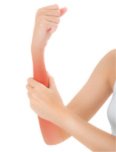
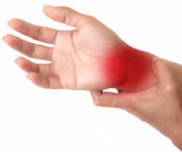
Click the block below that most closely matches your injury for more information and to find the Toolkit we offer to help you in your recovery.





Recent Articles


-
Golfers Elbow Symptoms
Oct 11, 18 05:40 PM
Golfers Elbow (Medial Epicondylitis) symptoms include pain at the medial epicondyle when the fingersw are closed, the wrist bent palmward, or pressure is put on the forearm near the elbow. -
deQuervains Syndrome
Oct 11, 18 05:40 PM
DeQuervains Syndrome is an arthritis-like pain in the thumb, with pain extending through the wrist and forearm when the thumb is moved. Information on symptoms, self care and anatomy. -
Tennis-Elbow-Anatomy
Oct 11, 18 05:40 PM
Tennis Elbow (Lateral Epicondylitis) anatomy is most affected by the extensor muscles and rotator muscles found in the forearm.

Sharon Butler has been a Practitioner of Hellerwork Structural Integration for 34 years and has specialized in helping people recover from Repetitive Strain Injuries of the upper body since 1991. She is the author of the best selling book, “Conquering Carpal Tunnel Syndrome and Other Repetitive Strain Injuries: A Self Care Program” along with 7 comprehensive specialized programs for the Self Care of RSI’s.